We Are Composting

Earlier this year we announced that after ten years of creative collaboration, we would be closing We Are Open Co-op on May 1st. May 1st has arrived.

Earlier this year we announced that after ten years of creative collaboration, we would be closing We Are Open Co-op on May 1st.
May 1st has arrived.
We have spent the last few weeks archiving a decade of work and created a new website to link to our various GitHub repositories and assets around the web. The wonderful Bryan Mathers created some images for us to help us explain our journey and the decision to close.
So long and thanks for all the fish:
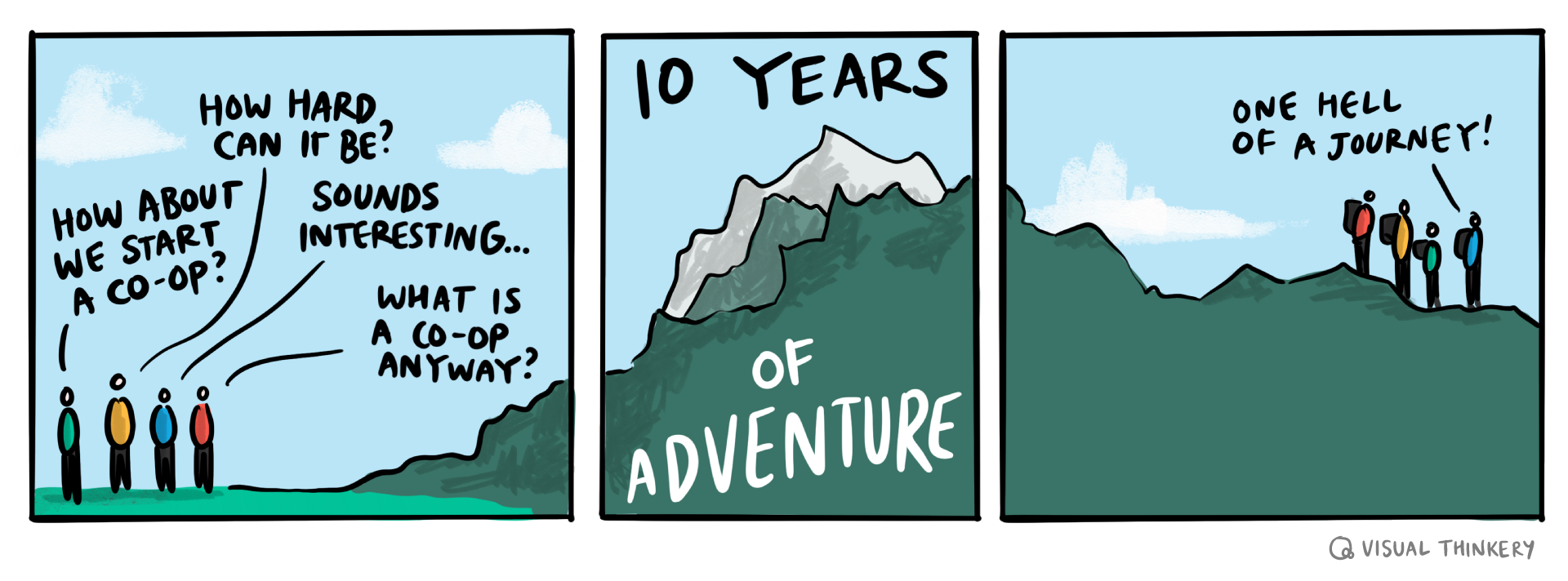
How hard can it be?
We started with four of us as founding members, expanded to six, went back to four and are ending with three. It all started with a shared hunch that we’d enjoy working together, and could run a fair and effective organisation.
Three of the four of us didn’t really know what a co-op was when we started. We found out by becoming one and figuring it out as we went along – which, it turns out, is how a lot of co-ops go about things. Like a magpie, you borrow bits of the governance docs from other co-ops, discuss (and argue) about the rest, and then 10 years later, you realise you’ve become one of the places that people are borrowing from!
It has been, as Bryan puts it in the above cartoon, one hell of a journey.
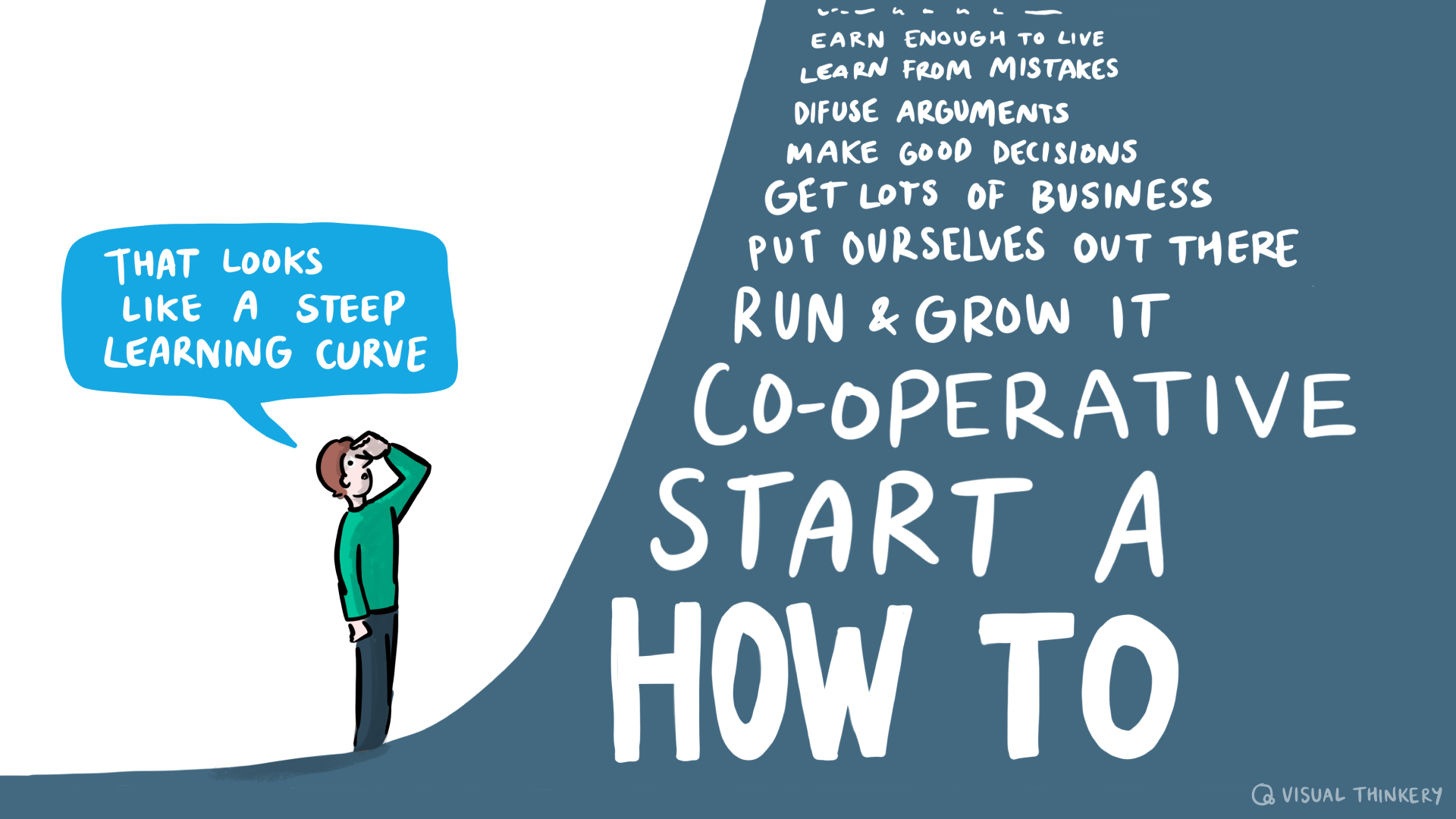
The job under the job
Earning enough money to live on is a skill. As is making good decisions collaboratively, defusing conflict, and learning how to work according to your values. Sometimes you learn these things on purpose, and sometimes you only acquire them by making mistakes.
We’ve had difficult years and good ones. And the good ones were usually built on the difficult ones.
The thing that nobody tells you about starting a co-op is that being cooperative is the best and the worst thing about it. Flat hierarchies don’t magically remove conflict – they just mean that nobody else will resolve it for you. Over time, you learn when to sit in discomfort and when to ask for help. You realise that “shall we start a co-op?” was actually a question with ten years of homework attached…
What we actually did
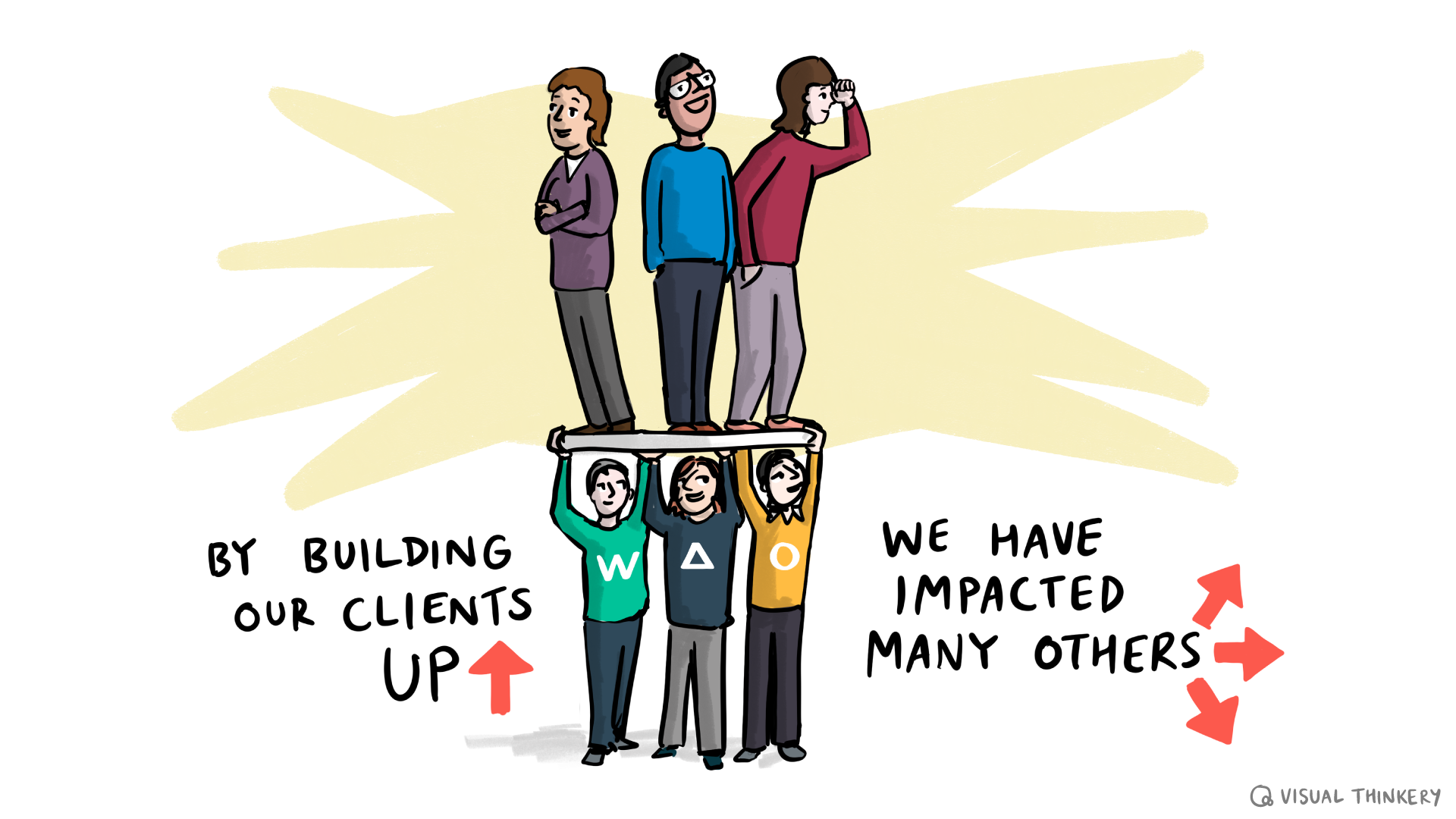
We turned up continually for organisations who were trying to make the world a better place. Most of them had got themselves tangled up a bit while working on big ideas and big missions. We helped charities who needed help figuring out how to reconnect with their communities, mission-driven tech projects that had outgrown their original mission, and organisations looking for more innovative ways to make an impact.
Rarely did we arrive with a finished answer. We were there to ask the hard questions and hold up a mirror to the client so that they could see the mess. Then, we got to work, in partnership, with them to sort it out. We were often the people behind the curtain, nudging organisations to be bold, think big and make choices that truly adhere with their (and our) values.
What kept us going – right until the end – is that the work didn’t stop when our project ended. We know our collaborators and clients are out there making better decisions, working more openly, and working more in alignment with their values than they did before they met us. You can’t always see this, but we know it’s there.
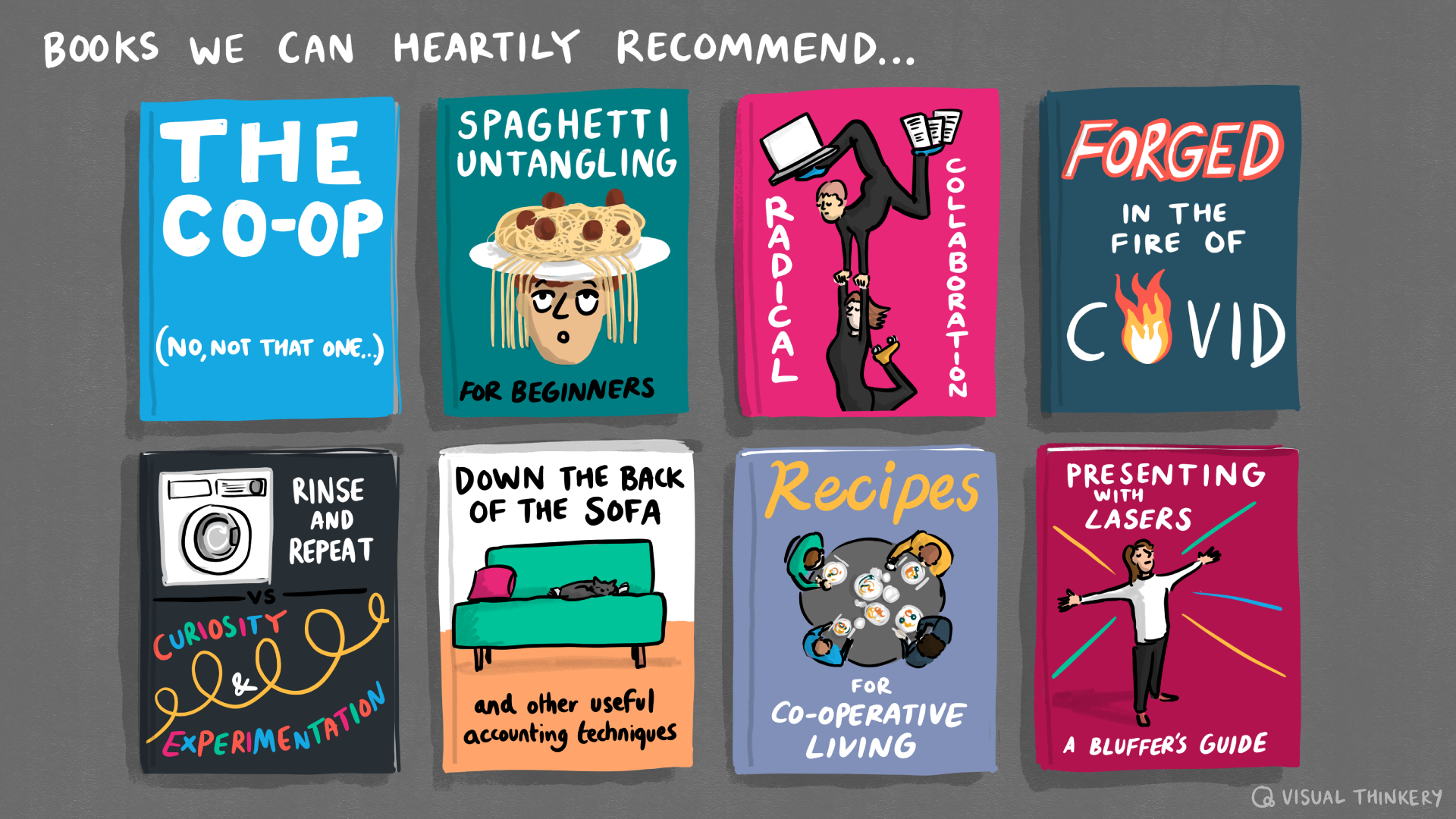
The books we could write…
When we asked Bryan to help us summarise what a decade of WAO has actually been about, he created these eight books. Some of them are in-jokes, but let’s imagine leafing through three of them.
Radical collaboration
Being ‘radical’ isn’t about being edgy for the sake of it. Instead, it’s about refusing to do the thing that most organisations ask you to do: leave most of yourself at the door, and show up as a smaller, more ‘professional’ version. This is very much not what we are about.
We wanted to work with each other, and with clients, as fully human beings. That made partnership the default, and meant being honest with clients when we thought they were wrong – and listening carefully when they thought we were.
Recipes for Co-operative Living
We’ve learned so much along the way, including some things we didn’t even know we needed until we stumbled across them. Sociocracy (aka consent-based decision-making), non-violent communication, pre-mortems. Checking-in with each other at the start of every meeting and co-working sessions.
Again, like magpies, we picked these things up from people who we realised were better at this kind of stuff than us. We learned heaps from Outlandish, as well as other cooperatives in the CoTech network. We got involved with Workers.coop and found that not only did we have more to learn, we had loads to teach as well.
Spaghetti Untangling for Beginners
For years, we struggled to explain what we did. We’d talk about ‘openness’ or ‘digital transformation’ or offer to run a Thinkathon to help them ‘get underneath’ a problem. We tried to explain that we are generalists at intersections like technology, community and learning. We tried to showcase our collective skills, and it was always difficult because we’re so similar and also so unique. At some point, we realised that we untangled organisations.
Time after time, people would arrive to us with a knotted-up thing. It could be a project, a community, a whole organisation – or even just an idea that got wrapped around itself. We’d figure out the shape of the knot, find an end, and pull gently. Just the tip, and then the rest would unravel itself.
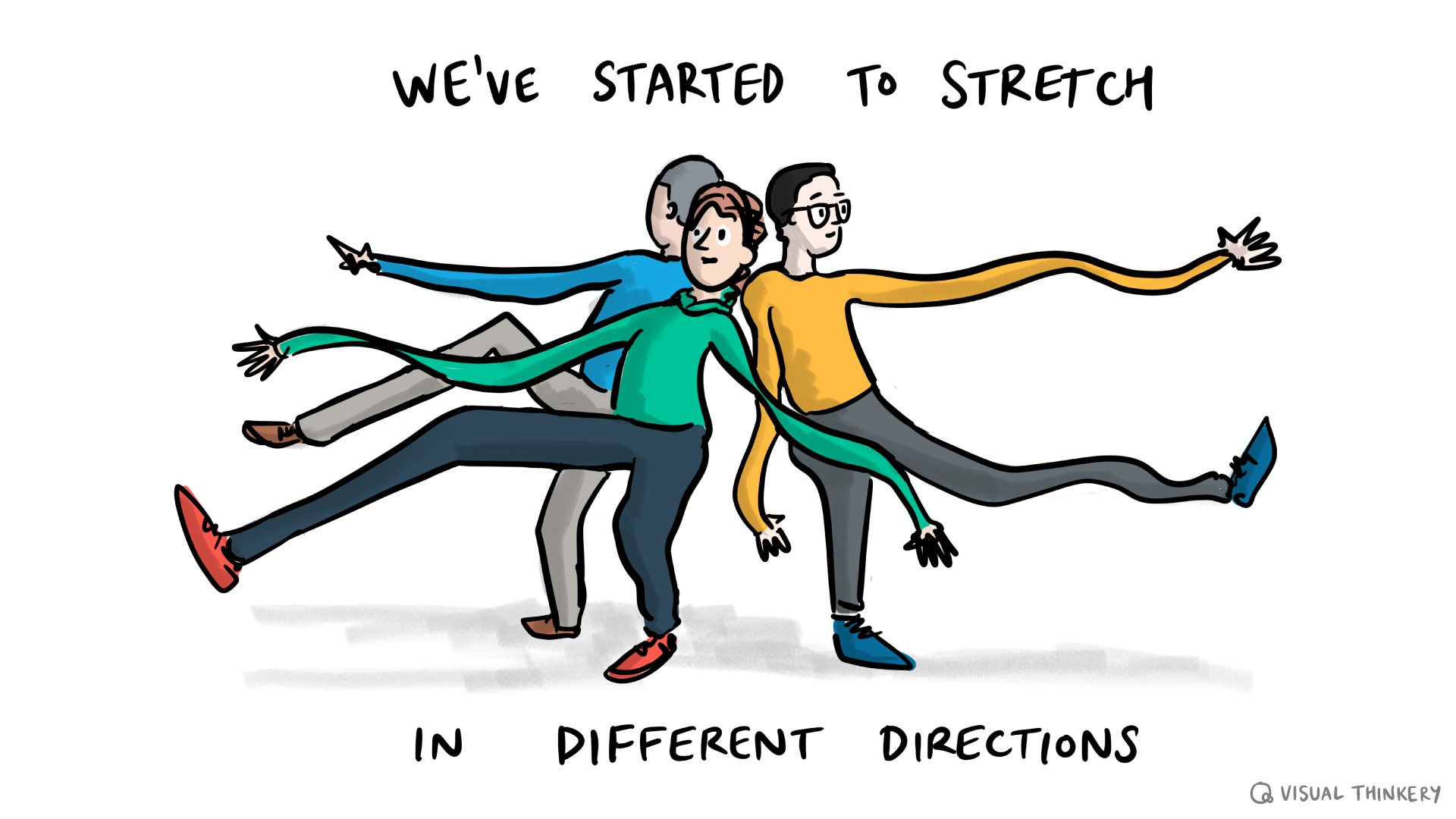
Why now?
Laura’s sabbatical starts today. John’s looking for a job. Doug is carrying on consulting. Right now, we all want and need slightly different things. These are all positive directions, it’s just that they’re not the same direction any more.
We could have kept going anyway. Many of our clients and friends actually asked us to. In all the ways that “business” is supposed to matter – clients, infrastructure, equity – we are ok. And lots of organisations do this – especially co-ops, forcing themselves to keep going because things are just fine. But we didn’t fancy being one of them. We don’t want to limp along while we’re stretching in different directions, having to contort ourselves to continue. Instead, we’re closing intentionally, while we still like one another, before anyone pulls a muscle. It’s hugely emotional, but it feels like the right call.
A quick note on Bryan
Every image in this post, and in most of our posts, is by Bryan Mathers. He has been an inspirational founding member and then collaborator to WAO over the years. Without overdoing it, we want to thank Bryan from the bottom of our hearts for bringing our ideas to life, and for contributing so much energy (“sunshine”) during the past decade.
The visual thinkery he created for WAO is now archived on GitHub. Go and have a look at him, then hire him: he will make whatever you’re doing better.
…and Hannah
Hannah Belshaw was our administrator from the start of the co-op until she changed careers to User Research. She was always a voice of calm, reason, and ensured that during the early days, we remained solvent!
…and Anne
Anne Hilliger joined us as an intern, and to our delight, continued with us as a collaborator until she landed a fantastic job. She worked on so many different projects while she was with us, and was also a source of inspiration and joy.
Thank you Bryan, Hannah, and Anne, our work was better for you being part of it 🙏
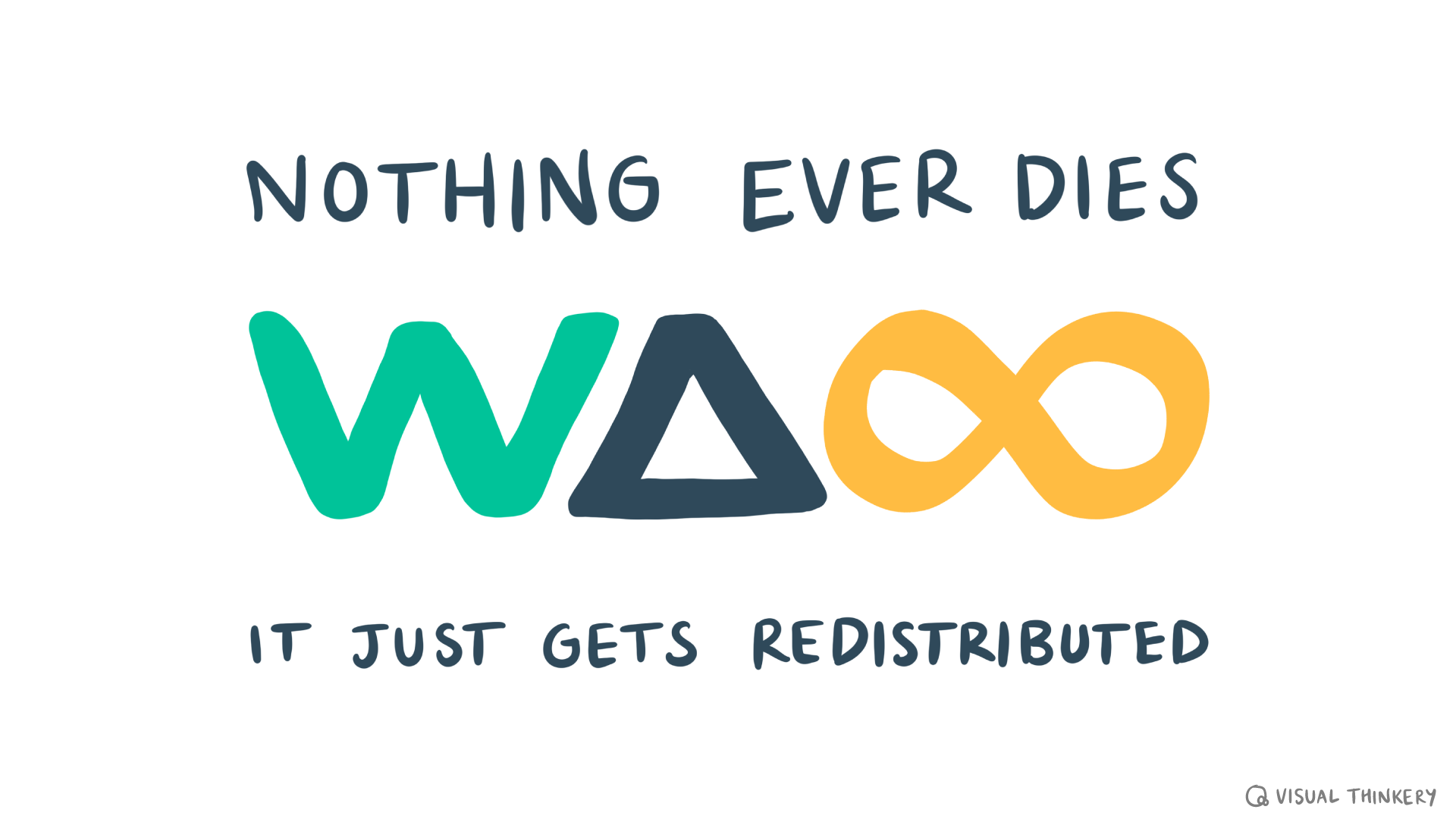
Redistribution
The first law of thermodynamics states that energy cannot be created or destroyed, only transformed from one form to another. With that in mind, we like to think that our work is being ‘composted’ to be used as a kind of mulch or fertiliser for the next batch of great ideas to spring from.
The methods and approaches we picked up and developed will find their way into other teams. Practices will continue on into new projects. Friendships will bloom. Openly-licensed resources will turn up in unexpected places, proving useful to people we’ll never meet.
Our domain will be active for another couple of years and then it won’t. Which is fine.
To our clients: thank you for trusting us – especially those at the start when we didn’t really know what we were doing.
To our partner co-ops and the wider co-op community: thanks for the solidarity, the connections, and the learning.
To everyone who attended workshops, commented on our posts, and could be thought of as part of our community: thank you. You were never just an ‘audience’. You were part of the compost heap.
See you on the internet
You can get in touch with us by reaching out personally:
- Doug can be contacted at hello[at]dynamicskillset.com
- Laura can be contacted at hello[at]laurahilliger.com
- John can be contacted at hello[at]johnbevan.com
Discussion